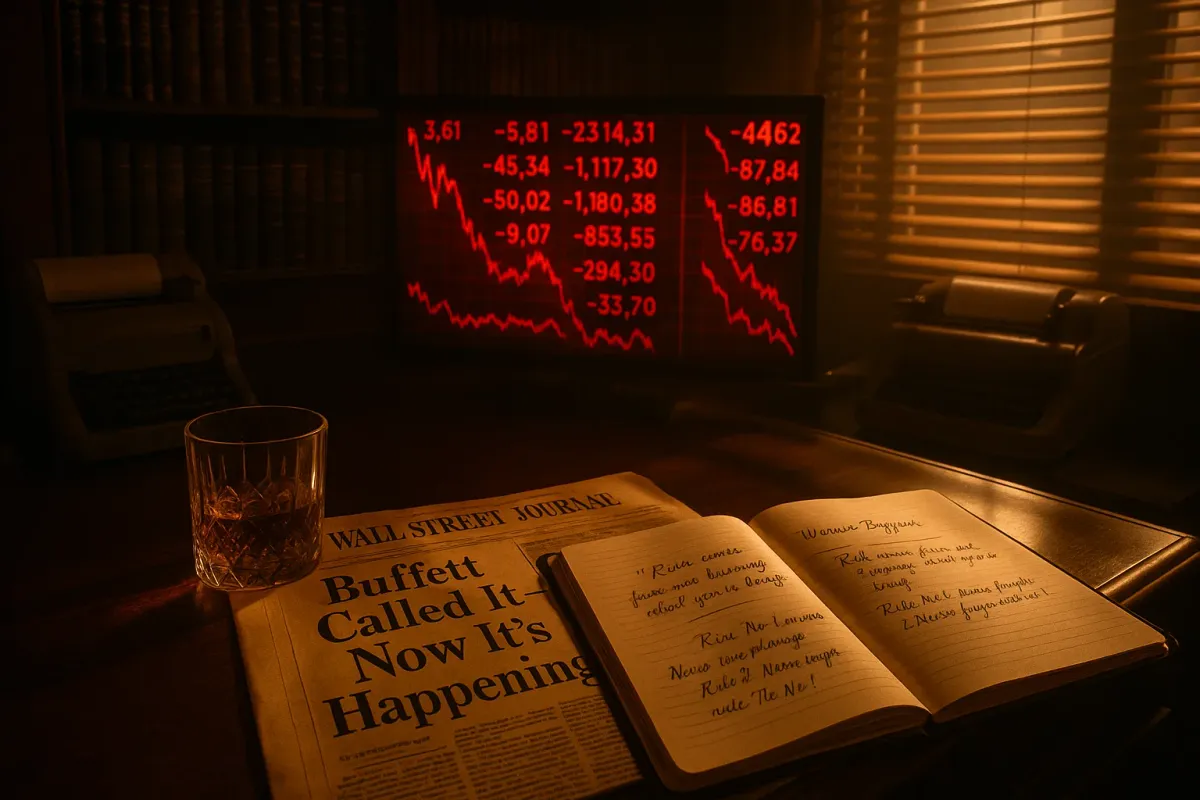
Buffett Called It — Now It’s Happening
Picture a river—steady, predictable, shaping the land quietly over decades. Now imagine the dam upstream is up for grabs. Will its new keeper preserve the flow… or change the current for all who depend on it?
That’s how this moment in monetary policy feels. Warren Buffett—the financial riverkeeper himself—recently warned against “meddling with the logic and independence of the Federal Reserve.” Within days, President Trump renewed his call for the White House to exert stronger influence over the Fed, pushing for more direct control on interest rates and the levers of America’s money supply.
It’s more than a drama for economists: it’s the unseen force shaping the retirements, savings, and stability of millions of ordinary Americans. The ripples from these arguments upstream will eventually reach every downstream wallet.
Why Fed Independence Matters—And What’s Now at Stake
For most, the Fed is an abstraction; a distant body of bankers adjusting rates and making veiled pronouncements. But it’s the linchpin to the dollar’s value, the cost of borrowing, and even the safety of your retirement.
Warren Buffett’s warning is clear: When politicians control monetary policy, the risk is that short-term goals (winning elections, goosing markets) overpower the discipline that keeps inflation, bubbles, and collapses at bay.
Trump’s argument is equally direct: If the White House can “force” rate cuts or prioritize economic growth over inflation-fighting, more Americans could see immediate job gains, wage bumps, and asset booms. But those short-term wins risk eroding the dollar’s long-term dependability.
At the heart is a core question: Should the river of American money flow according to political tides, or maintain a steady, somewhat boring course set by technocrats? That decision touches every bond, every pension, every dollar you save.
Warren Buffett didn’t stutter.
“We do not want to mess with the Fed.”
Why?
Because once political hands start steering the Federal Reserve…
Everything changes — fast.
Buffett’s spent decades warning this move could:
❌ Erase trust in U.S. markets
❌ Send inflation into overdrive
❌ And collapse the dollar’s dominance worldwide
But Trump?
He’s slamming the gas pedal in the opposite direction.
He’s calling out Powell by name.
Pushing for interest rate manipulation.
And hinting that the Fed is sabotaging America from within.
This isn’t some harmless political feud.
It’s a battle for control of your money.
And the stakes?
Your savings, your retirement, and the value of every dollar you hold.
That’s why we just released a must-read report for anyone holding cash, stocks, or retirement funds:
👉 Read: “The Fed Power Play, What It Means for Your Financial Future”( Claim Your Free Report Before the Window Closes )
Buffett knows how this ends.
And if you wait to react, it’ll already be too late.
Historical Parallels: When the Dam Broke
This isn’t the first time America has faced the temptation to politicize its monetary foundation.
- 1970s Stagflation: Pressure to “do something” about stagnant growth led to expansionary monetary policy, which unleashed double-digit inflation. The dollar’s buying power shrank, and savers took decades to recover.
- Nixon & the Gold Standard: Under political pressure, the U.S. detached the dollar from gold in 1971. The intention: flexibility and growth. The reality: years of instability, wild inflation, and eventual sky-high borrowing costs.
- Emerging Markets: Look abroad: countries that prioritized political control of central banks, from Turkey to Argentina, faced currency collapses and evaporated savings.
Buffett reminds us: “There are plenty of times society wants the central bank to just ‘do something now,’ and it almost never works out for savers in the end.”
How Fed Policy Shapes Your Financial Life
To bring these concepts home, let’s see how Fed independence—or political interference—directly affects the foundation of every household’s financial security.
Scenario One: An Independent Fed
- Sets interest rates focused on long-term inflation control.
- Willing to hold back asset bubbles, even if it annoys political leaders.
- Strengthens the dollar’s credibility internationally.
- Keeps savers’ purchasing power mostly intact.
Scenario Two: A Politicized Fed
- Pressured to cut rates for economic “sugar highs,” especially around elections.
- Risk of letting inflation run high to juice growth figures or stock markets.
- Dollar weakens as global trust erodes; borrowing costs eventually rise.
- Savers, pensioners, and retirees pay the price through devalued currency and unstable portfolios.
Calculating Dollar Erosion: The Power of Inflation
Let’s put this into a formula. If inflation gets out of hand—say, due to politicized Fed policy—your dollar buys less each year. Here’s a simple way to see the damage:
Future Dollar Value=Current Savings×(1−Inflation Rate)Years
If inflation averages 6% for a decade, $100,000 shrinks to:
$100,000×(1−0.06)10=$53,872
That's a nearly 46% loss in real purchasing power—not because of spending, but because the dollar lost its anchor.
What Ordinary Americans Should Watch Now
- Retirement savers: 401(k)s and IRAs are denominated in dollars. If the dollar weakens, global assets or inflation-hedges (like gold or TIPS) become more important.
- Fixed-income retirees: Pensions and Social Security COLA increases rarely keep pace with runaway inflation. Political pressure can widen that gap.
- Borrowers: Short-term, lower rates feel good, but in the long run, elevated inflation leads to higher mortgage and credit costs.
- Everyday savers: Money market rates and bank accounts lag behind inflation; real savings power slips away quietly.
Actionable Checklist: Building Resilience in Uncertain Times
- Audit your portfolio exposure. How much is in cash, bonds, stocks, and inflation-hedged assets?
- Diversify for policy risk. Global funds, gold, TIPS (Treasury Inflation-Protected Securities), and real assets can cushion against a weakening dollar.
- Review your retirement plan assumptions. Are you projecting returns in nominal or real (inflation-adjusted) terms?
- Monitor policy signals. Stay alert to Fed statements, political developments, and Buffett’s own warnings—they often foreshadow big shifts.
- Update your spending buffer. Build in a margin for rising costs—groceries, healthcare, and housing may spike unexpectedly.
- Work with an independent advisor. Get second opinions from someone who doesn’t profit from keeping you all-in on one asset class.
The Presidential Transition Guide: Prepare for CHAOS
Amercan Alternative Assets
The river of American money will keep moving, and so will political storms—but financial resilience isn’t about fighting the current or wishing away uncertainty. It’s about recognizing the shape of risk as it changes, standing on bedrock rather than sand.
Warren Buffett’s warning echoes for good reason: preserving the Fed’s independence protects the future value of every dollar saved, every pension check mailed, every grocery bill paid. When politicians tug at the dam, it’s the downstream households who feel the first ripples.
Prepare, stay curious, and guard your financial peace of mind. The river may shift, but if you build on trust, clarity, and timeless strategies, you’ll have the best chance to stand steady—no matter who’s steering upstream.
—
Claire West