The Upgraded Stock Revolution: How Wall Street Quietly Doubled the Rules
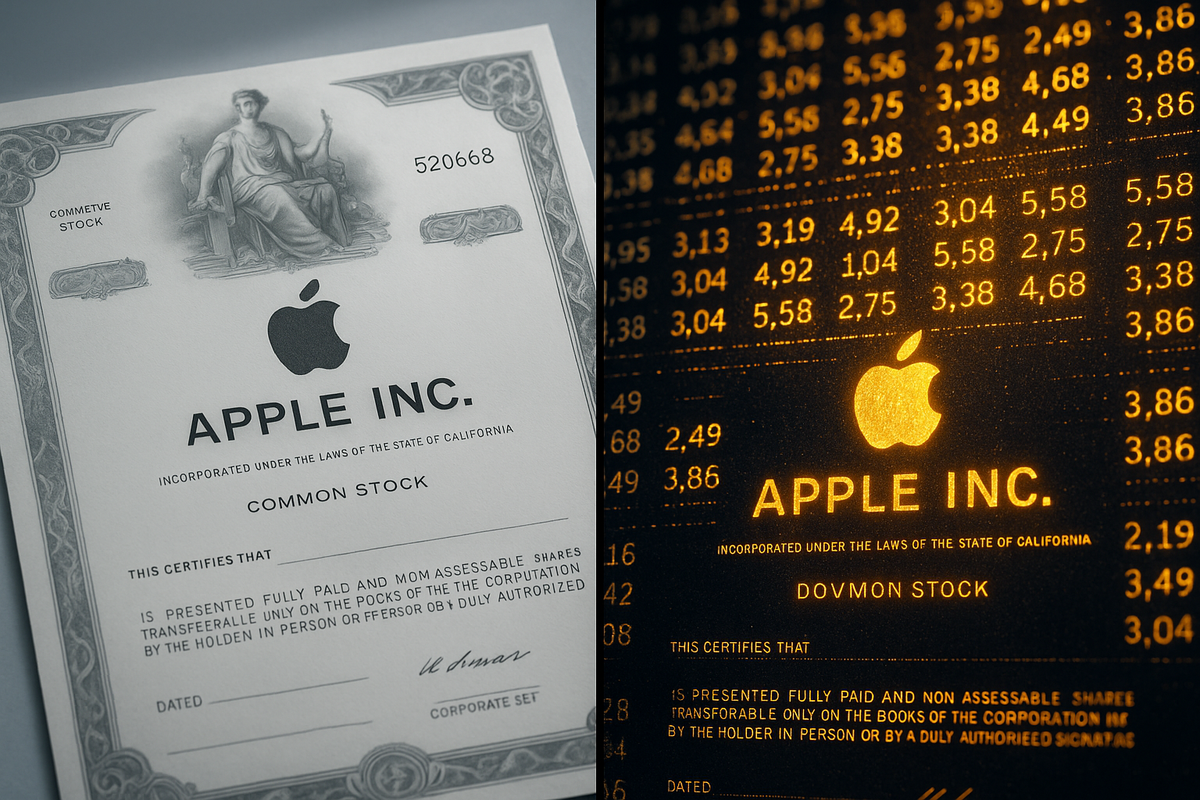
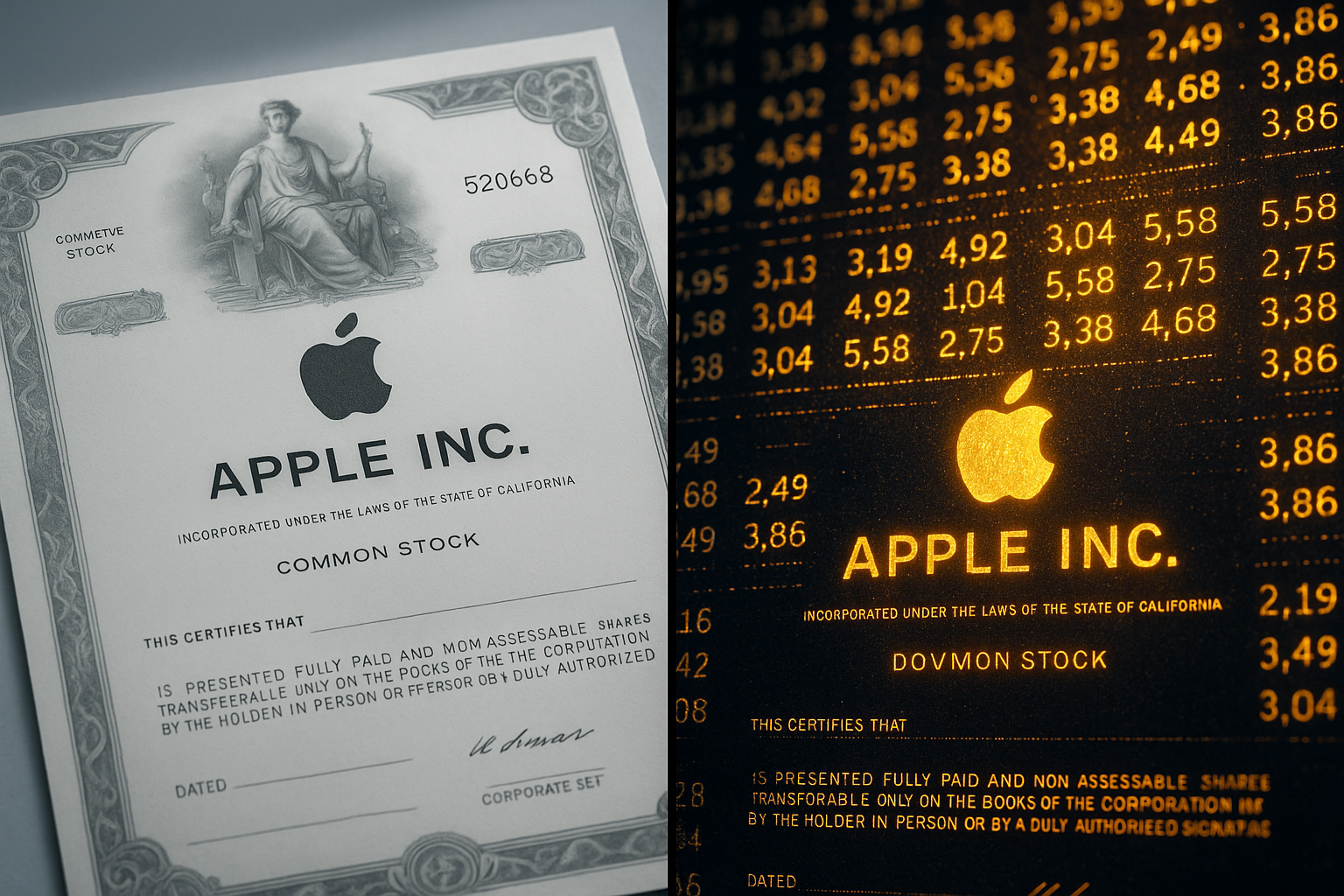
Two screens, side by side. Same company. Same ticker symbol. But the numbers don't match.
On the left: Apple Inc. (AAPL) — the world's most valuable company, paying shareholders a respectable but modest 0.49% dividend yield. On a $10,000 investment, that's $49 a year. Enough for a nice dinner, maybe.
On the right: the same Apple stock, but restructured through what insiders call an "upgraded yield structure." Same underlying equity. Same exposure to the company's performance. But the annual yield? 27.36%. On that same $10,000, you're now pulling in $2,736 annually—$228 a month.
Same company. Different structure. And for most investors, this parallel reality didn't exist until very recently.
This is the wild truth emerging from a quiet corner of Wall Street: a new class of investment instruments, once reserved for hedge funds and institutional players, is now leaking into retail brokerage accounts. And it's rewriting the rules of income investing faster than most people realize.
The Hidden Layer of Wall Street
For years, hedge funds and family offices operated in a different market than ordinary investors. Not just because they had more capital, but because they had access to financial structures most people didn't even know existed.
One of those structures: synthetic yield enhancement—a method of pairing equity holdings with options strategies, income overlays, and structured contracts to amplify cash flow without selling the underlying stock.
It wasn't illegal. It wasn't even secretive, technically. But it required institutional access, sophisticated custodians, and legal frameworks that retail brokers simply didn't offer. So for decades, the wealthy quietly transformed blue-chip stocks into income machines, while retail investors collected the standard dividend and hoped for price appreciation.
But something shifted. Regulatory changes post-2020, combined with competition among digital brokerages, opened the door. New platforms began offering "upgraded" equity structures—prepackaged vehicles that bundle stocks with income-generating overlays, making them available to anyone with a brokerage account and a few thousand dollars.
The democratization wasn't announced with fanfare. It just appeared, quietly, in account menus and robo-advisor offerings. And most investors still don't realize it exists.
Let me show you something wild.
Regular Apple stock: 0.49% annual yield or an "Upgraded" Apple investment: 27.36% annual yield
Same underlying company. 55X more income.
On $10,000:
Regular Apple: $49 per yearUpgraded version: $2,736 per year
That's $228 every single month instead of $4.
Tesla? Even better. Zero dividends normally. Over 50% annually with this upgrade.
Amazon? Zero dividends. Now potentially $306 monthly from $10,000.
This isn't some options scheme or day trading system.
It's a new category of investment — as simple as buying a stock — that was only available to hedge funds until recently.
Now? Anyone with a brokerage account can access it.
The catch? This window won't stay open forever.
As billions flood into these investments, the extraordinary yields shrink.
How the Upgrade Works
The concept sounds complex, but the metaphor is simple: it's not a new stock, not a derivative—it's like adding a turbocharger to an existing engine.
Here's the structure:
You still own the underlying equity—Apple, Tesla, Amazon, whatever. Your investment rises and falls with the stock price, just like a traditional position. But layered on top is a structured income channel: a combination of covered calls, dividend capture strategies, and premium collection mechanisms that generate cash flow independent of whether the stock goes up or down.
Think of it like this: owning Apple stock traditionally means you profit two ways—dividends (tiny) and price appreciation (hopeful). But with an upgraded structure, you add a third income stream: premium collection from options contracts written against your position.
The brokerage handles the mechanics. You don't need to understand options pricing or Greeks. You just hold the upgraded position, and the income flows automatically—weekly, monthly, or quarterly, depending on the structure.
It's financial engineering, but packaged for accessibility. The same technology that once required a team of analysts now runs through algorithms that retail platforms can deploy at scale.
The Math of Multiplication
Let's make this concrete.
Example 1: Apple (AAPL)
- Traditional dividend yield: 0.49%
- Upgraded yield structure: 27.36%
- On a $10,000 investment:
- Traditional: $49/year ($4/month)
- Upgraded: $2,736/year ($228/month)
Example 2: Tesla (TSLA)
- Traditional dividend: 0% (Tesla pays no dividend)
- Upgraded yield structure: 50%+
- On a $10,000 investment:
- Traditional: $0/year
- Upgraded: $5,000+/year ($416+/month)
Example 3: Amazon (AMZN)
- Traditional dividend: 0%
- Upgraded yield structure: 36.7%
- On a $10,000 investment:
- Traditional: $0/year
- Upgraded: $3,670/year ($306/month)
| Company | Regular Yield | "Upgraded" Yield | Monthly Income (on $10K) |
|---|---|---|---|
| Apple | 0.49% | 27.36% | $228 |
| Tesla | 0% | 50%+ | $416+ |
| Amazon | 0% | 36.7% | $306 |
The difference isn't marginal. It's transformative. For retirees, side-income seekers, or anyone tired of watching portfolios sit stagnant, this represents a fundamental shift in how equity holdings can function.
This isn't magic. It's the democratization of financial engineering—the same techniques institutions have used for years, now available to anyone willing to look past traditional brokerage offerings.
The Risk Layer: What They Don't Say in the Fine Print
Extraordinary yields don't come without constraints. And anyone considering upgraded structures needs to understand the trade-offs.
1. Volatility Exposure Remains
You still own the underlying stock. If Apple drops 20%, your position drops too. The income cushions the loss, but it doesn't eliminate it.
2. Liquidity Windows
Some upgraded structures lock your capital for defined periods—30, 60, or 90 days. You can't just sell instantly if the market shifts.
3. Capped Upside
The premium income comes from writing options against your position. If the stock skyrockets, your gains may be capped at a predetermined level. You trade unlimited upside for consistent income.
4. Tax Complexity
Income from upgraded structures may be taxed differently than traditional dividends—often as short-term capital gains. Consult a tax professional.
But here's the key insight: when applied correctly, upgraded structures rebalance portfolios toward consistent cash flow—transforming holdings from speculative positions into income-generating assets. For long-term investors who aren't chasing moonshots, that trade-off makes sense.
The Shift of Power: Timing and Access
For decades, the wealthy rewrote the rules of income. They didn't just buy stocks—they engineered them into yield machines using structures unavailable to everyone else.
Now those rules are leaking into the mainstream. Not because Wall Street became generous, but because technology and competition forced the gates open. Digital brokerages, robo-advisors, and fintech platforms realized they could automate what once required teams of analysts—and offer it to retail clients for a fraction of the cost.
This is the shift of power Claire West tracks obsessively: the moments when asymmetric advantages—once reserved for the elite—become accessible to ordinary investors.
But timing matters. Early adopters capture the advantage before it normalizes. Before everyone realizes what's available. Before yields compress as capital floods in.
Right now, upgraded structures are still niche. Most investors have never heard of them. Financial advisors at big firms don't promote them because they complicate the traditional managed-portfolio model. But for those willing to look beyond the default offerings, the opportunity is live.
Discover how a new class of “upgraded” stock contracts lets ordinary investors tap into hedge-fund-level yields — with the same companies they already own.
New "Paycheck ETFs" Could Send Up To $5,000 To Your Account Every Month
Investors Alley Corp
I lean back, screens still glowing with those side-by-side numbers. Apple at 0.49%. Apple at 27.36%. Same company. Different reality.
It's not that Wall Street suddenly became generous. It's that the machinery they built to serve themselves—the financial engineering, the structured overlays, the synthetic yield contracts—finally broke containment.
The tools are out. The platforms are live. The question now is whether ordinary investors realize the game just changed—or whether they'll keep playing by the old rules while a new class of income investors quietly captures what used to belong to hedge funds alone.
The upgraded stock revolution isn't coming. It's here. And it's rewriting the math of income investing faster than most people are ready to accept.
—
Claire West