When Access Becomes Permission: The Architecture of Financial Control
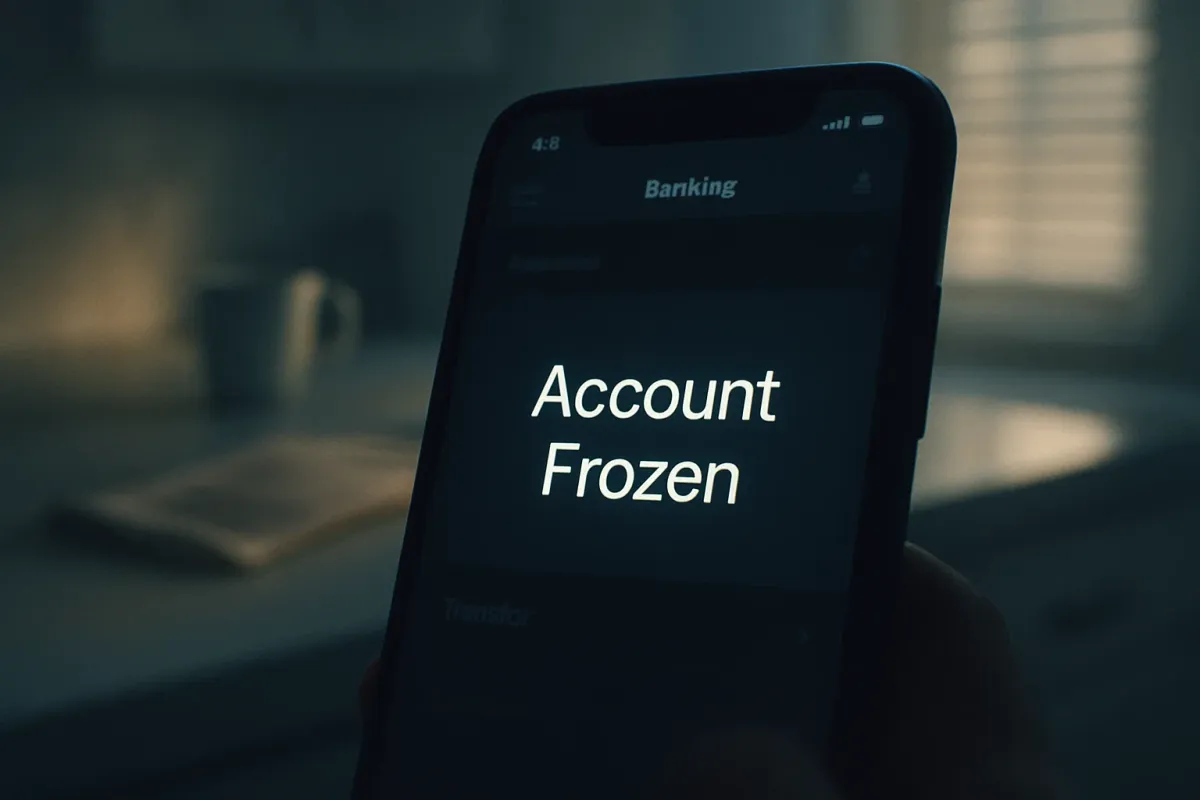
The notification arrived at 6:47 AM.
"Transaction declined. Contact your financial institution."
No explanation. No warning. Just a red X where her morning coffee purchase should have been.
She tried again. Same message. Her banking app loaded, but the transfer button sat grayed out, unresponsive. By noon, she understood: her account wasn't broken. It was frozen.
This isn't hypothetical. It's happening now.
The Background: When Money Becomes Programmable
The term sounds innocuous. "Central Bank Digital Currency." A CBDC. Just cash, but digital.
Except it's not.
As of October 2025, 134 countries representing 98% of global GDP were actively exploring CBDC implementation. Twelve G20 nations—including China, India, France, and South Korea—had reached the pilot stage. Four countries fully launched retail CBDCs for public use: Jamaica, the Bahamas, Zimbabwe, and Nigeria.
The infrastructure wasn't theoretical anymore. It was operational.
China's digital yuan processed billions in transactions. India's e-Rupee pilot onboarded millions in 2025. The European Central Bank positioned a digital euro decision for 2026, with ECB President Lagarde publicly stating that democracy was a "drag" on progress.
The United States took a different path. On January 22, 2025, President Trump signed an executive order titled "Strengthening American Leadership in Digital Financial Technology". By July, the House passed the Anti-CBDC Surveillance State Act, effectively banning a Federal Reserve-issued digital dollar indefinitely.
But the technology didn't disappear. It evolved.
The Federal Reserve continued participating in pilot programs—Projects Hamilton, Cedar, and Agora—building technical capacity "pending a decision". The Digital Dollar Project, launched in 2020 by former CFTC Chair Chris Giancarlo, completed multiple private-sector CBDC simulations, including a November 2022 pilot with the Depository Trust & Clearing Corporation exploring how a digital dollar might operate in U.S. clearing and settlement infrastructure.
The framework existed. The question wasn't if programmable money would arrive. The question was how it would be used.
Imagine waking up tomorrow and finding you can't access your money. No warning. No explanation. Just "frozen" until further notice.
That's not science fiction-it's the future of America's financial system. And with new "digital dollar" frameworks being quietly rolled out, it could be here sooner than you think.
Here's what's at stake:
- Your retirement nest egg
- Your monthly income
- Even your ability to buy essentials like gas and groceries
But you don't have to give in. Our new report shows you how to opt out of this system legally-and secure your wealth before it's too late.
This guide is 100% free, but it may not be available for long.
The Data: The Architecture of Control
The technical specifications revealed what the marketing language obscured.
Programmable money came in two forms: programmable payments and programmable money. Programmable payments automated fund transfers based on predetermined conditions—useful for smart contracts and efficiency. Programmable money imposed restrictions on usage itself—funds that expired within timeframes, money usable only for specific purchases, automatic tax collection during transactions.
The Cato Institute's analysis was blunt: "A CBDC would be one of the tools" for freezing or seizing assets, imposing negative interest rates, and controlling programmable spending. The European Data Protection Supervisor warned that "programmable money consists of a CBDC with built-in rules, imposing restrictions on the usage".
Research from the University of Pennsylvania examined programmable money's legitimacy, noting that while it provided "useful tools for implementing government programs such as social security and pandemic relief," the programmable design feature "may interfere with payment autonomy". The study concluded: "Such legitimacy concern is essentially a struggle between public and private powers in the mobilization of resources within a society".
The CFA Institute posed the critical question: "Could CBDCs destroy privacy?". Their analysis found that depending on technical solutions chosen—particularly "a fully centralized CBDC with clear and persistent user identification and full transparency on all online transactions"—the risk of generalized surveillance would emerge.
Federal Reserve Chair Jerome Powell stated explicitly: "We would not want a world in which the government sees, in real time, every money transfer that anyone makes with a CBDC". Yet the architecture being built made precisely that technically feasible.
The theoretical risks became tangible when examining recent enforcement actions.
In the UK, Account Freezing Orders increased 170% over three years, with 341 AFOs freezing £240 million across 1,800 cases in the 2023/24 financial year alone. The threshold for account freezing rose from £1,000 to £3,000 in 2025, and accounts could remain frozen for up to two years.
Vietnam provided the most dramatic case study. On September 1, 2025, the State Bank of Vietnam deactivated 86 million bank accounts as part of Project 06—a national digital identity initiative requiring biometric verification. Transactions above 10 million VND (approximately $400) now required biometric confirmation. Expats who couldn't return to Vietnam for in-person verification found their accounts frozen indefinitely.
The Vietnamese government called it a "data-cleansing revolution" to combat cybercrime. Those locked out called it something else: a warning.
The Shift: When Surveillance Becomes Infrastructure
The pattern emerged across jurisdictions.
Indonesia's Financial Transaction Reports and Analysis Center temporarily froze 28,000 dormant accounts in 2024, claiming the measure prevented misuse by "irresponsible parties". The Philippines' Anti-Money Laundering Council secured freeze orders on 592 bank accounts, three insurance policies, 73 motor vehicles, and 18 real properties in a single September 2025 action.
Georgia's authorities froze bank accounts of seven NGOs in August 2025 during "sabotage" investigations, with the Prosecutor's Office stating the organizations provided "financial patronage for individuals involved in violent acts". The frozen accounts had supported protesters by covering fines for blocking roads.
These weren't isolated incidents. They were demonstrations of existing capability.
The Rand Corporation analysis showed how law enforcement capabilities would "significantly expand" with CBDC introduction. While enhancing efforts to combat money laundering and terrorism financing, it raised fears of "mission creep"—where tools intended for limited purposes gradually evolved into broader mechanisms of control.
The Bennett School warned that "without legal and political safeguards, CBDC could empower government surveillance and undermine democratic oversight". Norbert Michel, director of Cato's Center for Monetary and Financial Alternatives, stated: "An implemented CBDC gives complete control over money going in and out of a person's account. It is not difficult to see that this level of government control is incompatible with both economic and political freedom".
Wikipedia's CBDC entry documented the risks plainly: "Digital currency will simply become an extension of the surveillance state" with capacity to see "citizens fined in a split second for behaviors deemed undesirable. Dissidents and activists could see their wallets emptied or taken offline". It could "make it impossible to donate to a vocal NGO" or "prohibit a purchase of alcohol on a weekday".
The technology enabled what previous systems only approximated: complete visibility and programmatic control over every financial transaction.
The Consequence: The Disappearance of Financial Privacy
For the small business owner processing payroll, programmable money meant every transaction visible to authorities in real time. For the retiree with savings, it meant funds potentially subject to negative interest rates forcing consumption. For the activist supporting causes, it meant donations potentially blocked at the source.
But the deeper consequence transcended individual impacts.
The shift from cash to programmable digital currency represented a fundamental change in the relationship between citizens and state. Cash provided anonymity. Digital systems provided visibility. Programmable digital currency provided control.
The CIGI paper on CBDC governance identified this as a "time-consistency problem"—even if initial safeguards were implemented, "CBDC infrastructure could be changed and initial safeguards overridden". Legal protections established at launch could be modified later, once infrastructure was entrenched and reversal became impractical.
The comparison to precious metals became stark. Gold and silver operated outside digital systems entirely. They required no technological infrastructure for ownership verification or transfer. They couldn't be "deleted" or rendered inaccessible through technological failures, hacks, or forgotten credentials. They maintained intrinsic value independent of financial system functionality.
As Discovery Alert noted: "Physical metals provide insurance against systemic collapse where no tech failure can delete them". During banking crises or electronic payment outages, precious metals could serve as medium of exchange when digital systems failed.
The wealthy understood this instinctively. Central banks accumulated 1,037 tonnes of gold in 2024—the second-highest annual total on record. They were positioning for a world where digital surveillance became infrastructure, and tangible assets became the last refuge of financial privacy.

Washington’s Push Toward a Cashless Dollar Could Put Your Savings at Risk
Reagan Gold Group
The Quiet Truth About Freedom
The pilots continue. The infrastructure develops. The technical capacity builds.
But physical assets remain outside the architecture. Gold requires no internet connection. Silver needs no biometric verification. Precious metals can't be programmed to expire or restricted to approved purchases.
The Vietnamese engineer couldn't access his frozen account from overseas. But gold held in approved depositories remained accessible through established legal channels.
The regulatory framework exists. The direct rollover process remains tax-neutral. The IRS-approved precious metals stay available for qualified retirement accounts.
The window for opting out remains open. But infrastructure, once built, becomes very difficult to escape.
The choice is yours. The time is now.
—
Claire West